
Category Creation & Rebrand
+ PDAC 2025 Launch
Timeframe
Aug 2024 to Aug 2025
Company
VRIFY
Role
VP Marketing
Read time
4 min
Read with...
- 01Defined the AI-assisted mineral discovery category and proof-first message house
- 02Shipped a rebrand system plus PDAC 2025 launch machine (pre, during, post)
- 03Connected narrative, events, and ABM into meetings and pipeline
This is a deep dive in the VRIFY case study.
As VP Marketing, I led the category definition and rebrand, and I partnered across Product, Geoscience, and Sales to turn PDAC 2025 into a forcing function.
The hardest part of mineral‑exploration SaaS isn’t building features, it’s earning trust.
When I arrived, prospects were intrigued by DORA, but our story read like a list of point tools. We reframed around a category that speaks to outcomes, not features: AI-assisted mineral discovery, with proof as the organizing principle.
PDAC 2025 was the forcing function. The operating loop was proof → demo → win.
What changed: we stopped shipping “launch assets” and built a single system that connected narrative, brand, event execution, and ABM into meetings and pipeline.
1) Insight: category definition
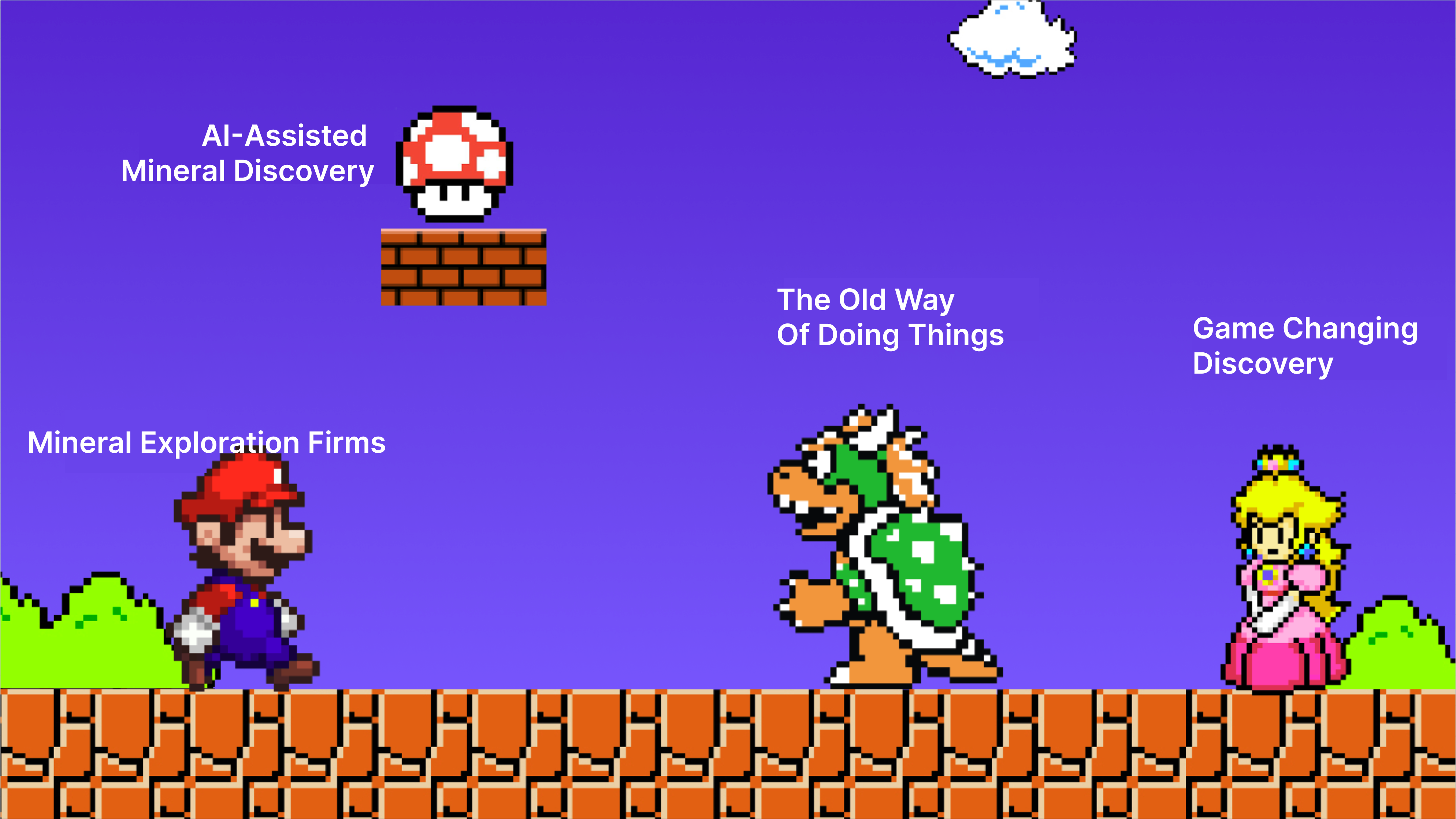
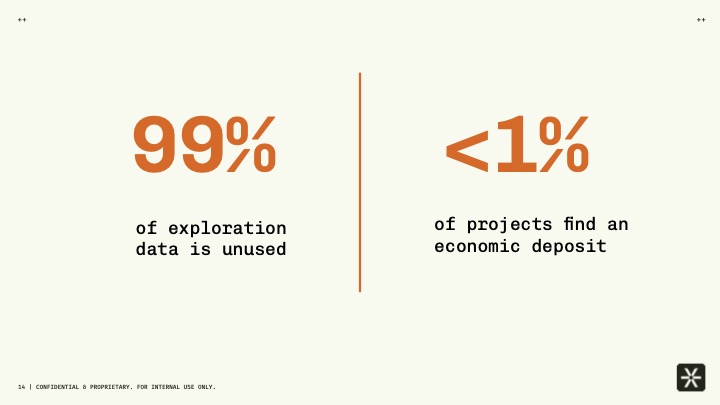
- Problem: Exploration data is fragmented and under-utilized. Black-box AI erodes trust. Capital allocators and operators need transparent, defensible proof to separate signal from noise and commit with confidence.
- Strategic leap: Define a category that speaks to outcomes, not features: AI-assisted mineral discovery, and make proof the organizing principle for GTM.
- Definition: An AI-assisted mineral discovery platform that puts AI in geoscientists’ hands, integrating exploration datasets, transparent machine learning (no black box), and interactive 3D to drive toward near‑100% data utilization and produce decision-grade proof.
- Who it’s for: Tier‑1/2 explorers with funded programs, strategic partners (producers, funds), and advisors and buy-side analysts who influence allocation.
2) Message house
- Category name: AI-assisted mineral discovery.
- Descriptor: An AI-assisted mineral discovery platform that puts transparent (no black box) AI in geoscientists’ hands to drive toward near‑100% data utilization and proof-led, higher-confidence exploration decisions.
- Positioning statement: For explorers and investors who need transparent, defensible decisions faster, VRIFY puts AI in geoscientists’ hands to turn more of exploration data into decision-grade proof.
- Proof pillars:
- Near‑100% data utilization: Unify exploration datasets with transparent (no-black-box) AI and interactive 3D to turn data into decision-grade proof.
- Decision-grade product proof: transparent (no-black-box) models with provenance and uncertainty, interactive 3D validation, and exportable evidence packs for boards and investors.
- Web-based, geoscientist-first interface: A browser-native workspace that puts transparent (no-black-box) AI and interactive 3D directly in geoscientists’ hands, no installs, fast collaboration, built for day-to-day exploration work.
- Reasons to believe: Quantified customer stories (RUA Gold, Canterra, SXG).
3) Brand system (rebrand essentials)
- Voice and tone: Plainspoken, evidence-first, confident but not hype.
- Visual: High-contrast, data-forward; 3D geometry as scaffolding.
- Identity kit: Logo lockups; colour system; typography; motion primitives; proof glyphs.
- Templates: Product one-pagers (DORA, Viz), case-study format, analyst brief, event booth system, announcement/PR kit.
4) Launch machine
Event spine: PDAC as the forcing function; Beaver Creek Precious Metals Summit and Denver Gold as follow‑through.
- T‑8 weeks: Finalize message house; booth narrative; ABM target lists; speaker abstracts; launch-day run-of-show.
- T‑6 weeks: Creative for booth/screens; site hero and landers; PR/editorial plan; outreach sequences for Tier‑1 accounts.
- T‑4 weeks: Sales enablement (talk tracks, objection handlers); demo scripts; pilot offer; briefing doc for media/analysts.
- T‑2 weeks: ABM messaging on Tier‑1/2; social editorial; paid retargeting; event meeting scheduler live.
- T‑0 (PDAC 2025): Narrative in motion: keynote/booth/demo cadence; capture and instant follow-up; pilot offers.
- T+1 to T+2 weeks: Follow-ups; proof activation; case-study capture; expansion offers.
5) ABM integration (focus to meetings to pipeline)
- ICP/tiers: CEO / VP Exploration personas; Tier‑1/2 definitions; coverage targets.
- Plays: Pre-event warmups; in-event meetups/demos/feature events; post-event proof offers.
- Cadence: Channel mix across AE, exec outreach, social, and field; shared daily stand-up during event window.
- Measurement: Meetings per target account; demo rate; pipeline per Tier; demo→proof conversion.
6) Site and lifecycle (through path)
- Site: Hero, product landers, and use-case pages aligned to the message house; SEO and speed fixes; CRO on demo paths.
- Lifecycle: HubSpot journeys keyed to role and tier; proof-first nurtures; post-event drips with case-study snippets.
7) PR and editorial
- Series B narrative: Tie financing to category leadership and customer proof.
- Owned media: Category explainer; founder POV; technical deep dives; customer proof spotlights.
- Earned: Brief analysts/media with proof-first angles; embargoed assets for launch week.
- Board updates: Report category, ABM progress, and customer marketing engine status with scorecard-backed signals.
8) Launch day run of show (PDAC 2025)
- Booth narrative: Concise story arc → problem, proof, product.
- Demo rhythm: Always available live demo; on-demand deep dives.
- Capture and follow-up: Scan → qualify → route; same-day sequences; pilot scheduling.
- Leadership loops: End-of-day stand-up; next-day adjustments.

9) Results
Results
- Brand/category: awareness ↑ +30%; share of voice ↑ +60% QoQ (LinkedIn + trade media).
- Demand: demo requests ↑ +65% in the PDAC launch window; sessions ↑ 1200%.
- ABM: Tier‑1 meetings/account 1.2 (list), 1.5 (engaged); coverage 80%; ABM-sourced pipeline 20% of new pipeline.
- Conversion: proof→demo 60%; opp→win 80% (+30 pp).
Decision support
FAQ: Fast answers, no filler
The objective, outcomes, and next best path in under a minute.
01What is VRIFY Category Creation & Rebrand?
A deep dive on defining the AI-assisted mineral discovery category, building the message and brand system, and turning PDAC 2025 into a proof-led launch machine.
02Why did VRIFY need a category and rebrand?
Prospects were intrigued by the products, but the story read like point tools. The category reframed the market around outcomes and proof, so sales conversations had clear boundaries and a repeatable decision logic.
03What was built in the rebrand system?
A category definition, message house, proof assets, and a launch run-of-show that tied narrative, event execution, and ABM into meetings and pipeline.
04How was the PDAC 2025 launch run?
Pre-event warmups, in-event proof moments, and post-event follow-ups, all anchored to the same proof story and ABM plays so marketing and sales worked off one system.
05What results are documented?
Awareness increased +30% and share of voice increased +60% QoQ. Demo requests increased +65% in the PDAC launch window and sessions increased 1200%. Tier-1 coverage reached 80% and ABM sourced 20% of new pipeline.
06Who is this approach for?
Best for technical, high-stakes sales where proof is the primary decision driver. Less useful when the product is a low-consideration purchase or category boundaries are already obvious.