
Increase Quality Site Traffic
Reversing a multi-year marketing site traffic decline
Timeframe
Jun 2020 to Aug 2024
Company
GitLab
Role
Senior Manager, then Director, Integrated Growth and Inbound Marketing
Read time
20 min
Read with...
- 01Took over a stalled working group and reset the operating cadence
- 02Flattened the decline in one month, returned to YoY growth by month three
- 03Delivered +20% annual traffic growth and +30% sessions (fiscal year)
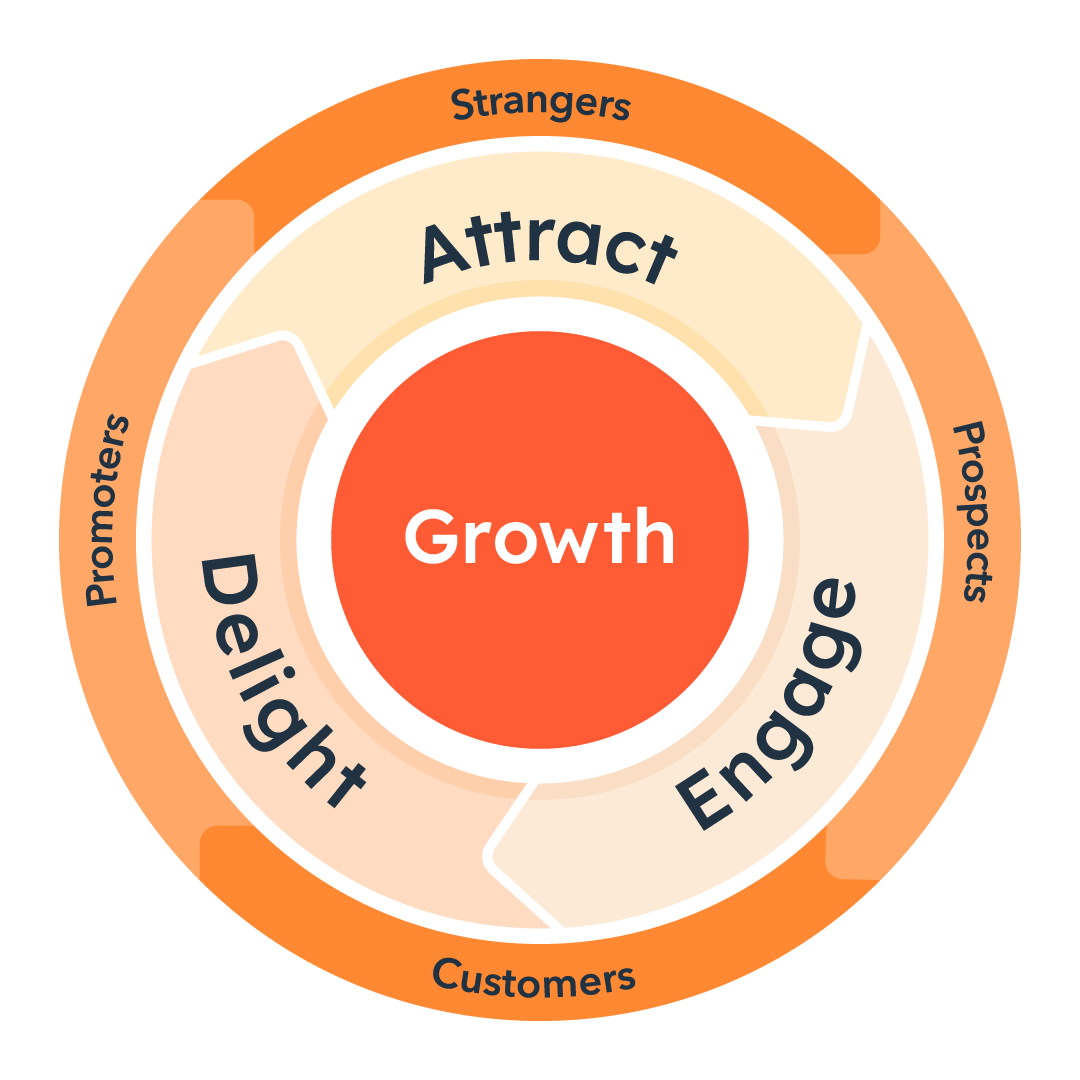
Problem: inbound traffic decline
GitLab’s inbound engine was historically strong, but from 2021 to 2023 the marketing site saw year-over-year traffic declines. Month to month the change looked small, but the compounding trend was obvious over three years.
Late in FY23, a working group had been set up to address the issue, but it wasn’t moving metrics. I raised my hand to lead the initiative and reverse the trend.
This sat inside my integrated growth and inbound charter, meaning inbound and growth marketing work ran as one operating unit.
After getting support from the relevant leaders, I set up an action plan framework with loose actions for each function and asked owners to iterate on it. Then I pulled in the cross-functional owners (SEO, Content, Lifecycle, Paid, Campaigns, and Digital Experience) and set a simple loop:
Operating loop: cross-functional ship and review
- Agree on the target pages and the levers.
- Ship changes weekly.
- Review impact in the scorecard.
- Cut anything that wasn’t moving sessions and conversions.
The quarterly plan template and Q2 plan are detailed in the deep dives linked from the parent GitLab case page.
FY24 Q1 plan: research and execution
FY24 Q1 planFY24 Q1: Increase traffic to GitLab marketing site
Research, execution, measurement
Executive Summary
Historically, Q3 pipeline has always been a concern. We must take action now to ensure the softness in the Sales pipeline is not recurring. There is also an excellent opportunity to maximize businesses’ needs to find cost efficiencies due to economic headwinds. Completing this initiative will set up an effective second half of the fiscal year.
Business Goals
Primary (leading indicator): Increase traffic to GitLab’s Marketing Site by x%.
Secondary (lagging indicator): Drive engagement/free trials and pass quality sign-ups to the Growth Team or connect qualified Enterprise leads to Sales.
Working Group
- DEX: @fqureshi
- DEX Analyst: @dennischarukulvanich
- Content: @chandlergibb
- SEO: @ncregan
- Lifecycle: @Aklatzkin
- Paid: @jshin3
- Campaigns: @aoetama
- Social: @award4
- DRI: @mpreuss22
Phase 1: Research and Planning (30 days) DONE
Objective
Gather data and research our target audience, industry trends, and competitors to inform strategy and tactics.
Tactical activities
- Collect available market and audience research/information and define our target demographics and their pain points.
- Review available buyer personas and generate a customer journey map.
- Analyze industry trends and competitor landscape to identify opportunities and gaps.
- Define KPIs and goals for each link in the value chain.
- Create a comprehensive content calendar that aligns with the customer journey and goals.
- Align on a clear project plan and timelines for each link in the value chain.
Phase 2: Optimization and Execution (60 days)
Objective
Build our brand presence and create compelling content to attract and engage our target audience. Our primary goal is to increase inbound traffic to GitLab’s Marketing Site. We will then drive quality sign-ups by screening out low-intent leads and getting high-quality leads to sign up for a free trial (Commercial) or talk to an expert (Enterprise).
Tactical activities
- Optimize the marketing site and landing pages for SEO, using existing keyword research/insights and ensuring on-page optimization.
- Review keyword research: execute analysis to identify business term phrases our target audience uses to find products, services, and solutions like ours. Split into two initiatives: Expansion opportunity (what we can go after and establish where we currently do not compete and can create new assets) Optimization opportunities/striking distance (what we improve based on striking distance terms/page one opportunities for existing assets)
- CTR Optimization: Audit and identify opportunities to increase organic click rates from SERP results by updating and optimizing metadata. Audit by subfolder and calculate a baseline, and look to update anything below the threshold (possible target of -25% of baseline avg.).
- SEO team to action (may require the assistance of content team/and/or DEX if bulk update processing is possible - to confirm.)
- Optimize on-page elements: high-value traffic pages and identify additional improvement gaps engineers can execute to improve search engine interactions. Audit each page individually and map requirements, such as: alt tag updates, image optimization, eliminating render-blocking resources, defer screen images, adding dimensions to images, optimizing header structure formatting, etc.). SEO team to create action files, DEX team to action.
- Digital Experience Engineering team to implement.
- Content decay analysis: identify key pages that have degraded over time (example: 3 months data YoY.) Identify high-value pages for refresh/updates to improve informational value and competitiveness (based on gap analysis) and optimize (depending on content type) for elements such as topics/PAA/semantic terms/entities/etc. Executing refresh updates on decayed assets maximizes ROI and requires a minimal lift compared to creating net-new assets.
- SEO team to create Frase briefs for target pages, Content team to action (this element depends on available Content team bandwidth.)
- Improve Marketing site structure: Digital Experience Analyst and Product Designers to review user journeys. Ensure that the path to conversion has a logical and easy-to-use structure, with straightforward navigation and a hierarchy of information. Use breadcrumb navigation, internal linking, and a sitemap to improve crawlability.
- SEO team to review and align on this.
- Optimize Marketing site speed: Test the website speed using Google PageSpeed Insights, review the results, and identify the issues that need to be addressed. Optimizing the site speed can be done by minimizing HTTP requests, optimizing images, enabling browser caching, minimizing the use of external scripts, and compressing files. Regularly monitor the website's speed and SEO scores to ensure it is always up-to-date and optimized.
- SEO team to review and align on this.
- Create high-quality content: Create valuable and informative net-new content (DevSecOps survey landing page, new topic pages, new blog posts) and improve existing content (topic pages, customer case study pages) to increase organic traffic, attract backlinks, and improve the site's authority.
- SEO team to review and align on this.
- Review messaging: Align messaging with brand positioning. Review all key pages and ensure the most up-to-date GTM message and imagery are present.
- Identify top X key pages & subsequent target audience
- Map key pages to the 3 always-on campaigns (Auto SD, Security & Compliance, DevSecOps platform)
- Align messaging on key pages to mapped campaigns message house (Message house example for DevSecOps platform campaign)
- Update imagery on key pages to new visuals created for FY24 campaigns
- Align assets linked from each key page to assets identified in the mapped campaigns buyer’s journey (Buyer’s journey example for DevSecOps platform campaign)
- Campaigns to review and align on this.
- Utilize structured data: Optimise and scale the website for structured data (rich & featured snippets) across all page types. Structured markup has been found to increase CTR by 30% in certain instances. As zero click results in SERPs become more predominant, schema is a balancing strategy. Utilize competitor analysis and industry tools to identify and ensure alignment of best schema type to page type/template. Also, investigate the use of automation elements to maximize scalability.
- SEO team to review and align on this, DEX Engineering team to implement it.
- Custom conversion paths. Create specific conversion paths for both Commercial and Enterprise leads.
- In collaboration with Digital Experience Analyst.
- Paid digital: Optimize existing campaigns for high-value engagement, like free trial signup or demo signups. Launch new campaigns and new channels to support additional personas and audiences.
- Paid social audience/persona testing: experiment with in-platform (inside LinkedIn, Google, etc.) targeting options to reach our intended audiences in a more quality engagement-focused manner.
- Align with the campaigns team to ensure we go after the intended audience.
- Paid search keyword expansion: implement different match types (exact, phrase, broad) and expand existing keywords to increase addressable marketing audience.
- Collaborate with SEO on expansion and expose our work to PMM teams to share keyword learnings.
- Invest more heavily into paid search: SEM is where all the high engagement traffic lives, so we want to reallocate away from social into more paid search. We have a lot of Google Ads potential still left on the table, and we want to expand into BingAds (the other big search engine).
- Use social media advertising: Utilize social media platforms such as Facebook, Instagram, and LinkedIn to create targeted advertising campaigns based on demographics, interests, and behaviours.
- Content to support.
- Could use some more support on the creation of conversion, action-oriented content. Evergreen, not time-specific.
- ROI Calculator is an interesting example.
- Idea: coordinate with Product Marketing’s GTM with time savings.
- More landing page testing: Either A/B testing or hard switching works, but improving CVR is the only way to meaningfully improve engagement/free trial. We need to be doing more A/B testing to bring up CVR.
- Collaborate with DEX to plan out tests and launch on a regular cadence.
- Marketing specific, closed off that one can only access from a paid ad.
- Include a form, making it easy to take action.
- Idea: based on these improvements, we should track how our conversion rates give us more favourable discounts.
- Diversify into new paid channels: Experimenting with channels outside of what we’ve historically run will increase our volume and give us new learnings and tools for future campaigns.
- Youtube video ads, Gartner review site PPC program, more segmented Retargeting.
- Utilize social media channels to increase brand awareness and drive website traffic.
- Align this project with existing social media strategy:
- Conduct social media audit (with Hirewire PR team) to review current metrics, trends, and establish FY24 social media channel and content strategy focused on driving social media engagement (likes, comments, shares, video views) & increasing brand awareness.
- Align social media FY24 with brand/top funnel strategy
- Create engaging content:
- Identify FY24 campaigns and align with FY24 social media channel strategy with content that will inspire, educate and inform
- Partner with content and campaigns team on content calendar
- Use social media advertising:
- Collaborating with Paid and content, test organic social media boosting if the budget allows. [gitlab-com/marketing/demand-generation/digital-marketing#208 (closed)]
- Use social listening: [Currently implemented]
- Social media listening is being utilized to track brand health, competitor analysis, and current events, and social listening reports are provided on a case-by-case basis.
- Use social media analytics:
- Collaborate with Digital Experience Analyst to edit the current Sisense dashboard that reflects engagement metrics.
- Use social media to drive Marketing site traffic: [difficult to implement] - Organic social’s function is to drive awareness and increase SOV - it’s a softball approach to marketing. Link clicks in organic social are down across all social networks as users are looking to engage 1:1 and share information, so we’ve started to work with the content team on ways to increase engagement.
- Collab with campaign teams to ensure UTMs are added to social media issue requests
- Social is collaborating with the content team to experiment with using content in ways to drive users to engage and share with blogs [issue] & case studies [issue]
- Engage with our audience: [Currently implemented, but we could use more support]
- Collaboration with community relations and support to have more dedicated resources to answer questions and facilitate discussion.
- Identify a DevOps expert or micro-influencer to help curate social media content.
- Implement lifecycle marketing campaigns, such as email and retargeting, to nurture leads and drive conversions.
- Build and segment email lists: Develop email lists based on behaviours, demographics, and interests to create targeted campaigns.
- Analyze existing audience: Understand what data we have regarding behaviour, interests, and cross-channel campaigns to bucket audiences into segments to test.
- Build retargeting audiences: Determine which pages and ads have the most traffic to retarget off of engagements.
- In collaboration with Paid team and SEO team, keyword analysis.
- Personalize emails: Deliver more relevant content in a timely manner, personalizing based on information the audience has shared with us (i.e. building specific funnels/journeys based on keywords people found us on, retargeting emails based on LPs they visited)
- Added personalization in emails: Use personalization to make content/journeys more relevant to users’ use case/industry/sales segment/persona.
- Send emails from a person or “Alex Taylor” to make them seem more personalized.
- (Low-hanging fruit) Use industry name/company name/lead name in subject lines/body copy to see if it improves open rates/click rates
- In collaboration with Digital Experience Analyst and SEO team.
- Use email automation:
- Create trigger-based emails: Emails that will be sent automatically based on high-impact actions, visits to the site, content downloads (i.e. trigger next steps emails, follow-up next steps), abandoned cart (visited trial page, but didn’t convert), outreach to talk to sales.
- In collaboration with Paid team.
- Use retargeting:
- In combination with C: trigger campaigns that retarget users with the following steps on high-impact pages/assets. Alternatively, paid can retarget users who are actively engaging with emails.
- Specific email flows for areas where we are performing low from a conversion perspective - i.e. someone comes in on certain ads, and their email performance is low. We can align the content to make the messaging more cohesive and appeal to the audience further.
- In collaboration with Paid team.
- Use A/B testing:
- Currently in plan for lifecycle team: Create A/B testing strategy to determine when we test before adding to nurture vs. emails already existing in nurture.
- Conduct A/B tests optimizing the length of copy, variations of phrasing, various CTAs, subject lines, etc.
- Take learnings from the Digital Experience team’s tests and test in email.
- Share learnings with the Digital Experience team to test on the site - Lifecycle A/B testing sheet.
- In collaboration with the Digital Experience team.
- Monitor:
- Create Marketo reports to see email performance and identify opportunities for improvement.
- Track conversions on LPs coming from email UTM.
- In collaboration with Digital Experience Analyst and SEO team.
- Promotion: work with self-service to create another discount similar to 3 months free (potential later idea)
Phase 3: Measurement and Optimization (90 days)
Objective
Continuously measure and optimize marketing efforts to improve conversions and ROI while collaborating with the Sales team to ensure successful lead conversion and deal closure. Utilize data insights and learnings to iterate and improve the overall marketing plan.
Tactical activities
- Continuously measure and analyze analytics and campaign data to identify areas for improvement.
- Optimize campaigns and the Marketing site based on data insights to improve conversions and ROI.
- Collaborate with the Sales team to ensure they have the resources and support they need to close deals.
- Continue to develop and distribute valuable and engaging content to drive growth.
- Based on learnings over the previous 90 days, iterate and optimize this plan based on data and results.
Metrics
Primary KPIs - Project Objective
Sessions and Users
Target: Increase visits and visitors to the Marketing website by x% QoQ
Evaluate sessions by the source of traffic to optimize channel performance MoM
Evaluate brand impressions from search and social channels to monitor lifts MoM
Secondary KPIs - Business Objective
Evaluate the quality of the visit and visitor
- Bounce Rate: engagement performance of the landing page.
- CTA Click Rate: navigation to conversion pages (SaaS and Self-managed Trials, Self-service Checkout, and Contact Sales).
- Leads CVR: top-of-funnel leads from Marketo forms and Drift email submissions.
- Account Registration CVR: account registrations for the free and ultimate trial accounts
- Trial CVR: Monitor SaaS and Self-managed trials
Evaluate ROI
- ARR: Allow 40 days for the FY24Q2 cohort to fully mature, as a trial can take up to 30 days. Evaluate the cohort’s total ARR.
- Cost: Factor in ad spend from paid campaigns
FY24 Q2 plan: compounding experiments
FY24 Q2 planFY24 Q2: Increase traffic to GitLab marketing site
Plan focus and KPIs
Executive Summary
Q1 of our marketing site traffic plan laid the foundation for success by focusing on enhancing content, SEO, lifecycle marketing, paid digital marketing, digital campaigns, and social media marketing. We made significant progress in optimizing top pages, launching new campaigns, and establishing a content calendar to drive conversions.
Our Q2 plan builds upon the achievements of Q1, emphasizing personalization, user experience, and performance optimization. By the end of Q2, our marketing site traffic strategy will have evolved to deliver more personalized and targeted messaging, ultimately driving increased visits, conversions, and purchases on the marketing site.
Business Goals
Primary (leading indicator): Increase sessions by 9% and users to the Marketing site by 3.5% YoY (vs. May, June, July).
Secondary (lagging indicator): Drive engagement/free trials and pass quality sign-ups to the Growth Team or connect qualified Enterprise leads to Sales.
Working Group
- DEX: @fqureshi
- DEX Analyst: @dennischarukulvanich
- Content: @chandlergibb
- SEO: @ncregan
- Lifecycle: @Aklatzkin
- Paid: @jshin3
- Campaigns: @aoetama
- Social: @award4
- DRI: @mpreuss22 & @bstallings
Phase 01: Implementation (30 days)
SEO
- Continue click loss optimizations (next top 20 pages) to regain lost traffic and measure results.
- Identify new high-impact content opportunities and conduct keyword research (topics folder focus: optimizations & create net new topics pages and continue building folder traction).
- Work cross-functionally with the Digital Experience team on identifying and road-mapping technical SEO fixes.
Paid
- Monitor the performance of the newly launched ad channels and optimize for better ROI.
- Utilize Bizible data to optimize campaigns towards more meaningful goals (MQLs, free trials) and explore new bidding strategies.
- Collaborate with Digital Experience to continue paid landing page CRO
Lifecycle Marketing
- Launch personalized email campaigns using the new email templates designed by the Digital Experience team.
- Transition trial and free user emails to Iterable to be able to enable insights to optimize and drive further conversion/adoption metrics.
- Work with growth to develop trial/free user nurture tests to improve free > trial > paid conversion.
- Improve audiences/grow use cases for newly launched trigger-based emails
Campaigns
- Activate campaign bundles refreshed in Q1.
- Develop and launch new assets as per refreshed campaign bundles content plan outlined in Q1.
Digital Experience
- Complete collaboration with Lifecycle Marketing to enhance designs of mobile and desktop email templates
- Begin development of personalized experiences for Commercial (SMB or Mid-Market) and Enterprise prospects on key pages of the path to purchase journey.
- Identify opportunities to improve mobile user experience and site performance and create a plan to implement the improvements.
- Work with the SEO team to identify technical SEO improvements and create an action plan to address them.
Content
- Review performance of click loss optimizations from Q1 and adjust approach as needed.
- Align content production with the predefined content calendar for the rest of the year, focusing on high-impact content that drives conversions.
Social
- Analyze the impact of social media boosting on Marketing site traffic and engagement and provide recommendations for boosting program
- Finalize social media playbook and introduce social media strategy to marketing and sales
- Relaunch Bambu, social media employee advocacy program, and increase GitLab team member shares and traffic to marketing site
Phase 02: Execution (60 days)
SEO
- Assess the results of the top 20 pages optimization and identify additional high-impact pages for optimization.
- Implement on-page and off-page optimization for new high-impact content topics identified. (striking distance terms/CTR opportunities/link opp. etc.)
Paid
- Continue optimizing campaigns based on Bizible data insights and evaluate new bidding strategies.
- Expand existing paid media channels through continuous testing and optimization.
- Assist activation of content syndication platform with Campaigns.
- Assist social promotion (organic, not paid) with the Social team.
Lifecycle Marketing
- Analyze the impact of the reusable email snippets and new personalized email campaigns.
- Develop new email campaign ideas based on engagement data and target audience behaviour, focusing on nurturing high-intent prospects.
Campaigns
- Monitor the performance of the new campaigns launched in Phase 1 and optimize them based on data insights.
- Develop and test new creatives for improved targeting and messaging to high-intent prospects.
Digital Experience
- Start A/B testing key pages of the path to purchase journey, emphasizing personalization for SMB, Mid-Market, and Enterprise segments.
- Analyze A/B testing results from key pages and implement changes accordingly, focusing on optimizing the user experience and increasing conversions.
- Continue developing personalized experiences for Commercial (SMB or Mid-Market) and Enterprise prospects on key pages of the path to purchase journey, incorporating feedback and learnings from A/B testing.
- Implement improvements to mobile user experience and site performance.
- Complete the technical SEO action plan in collaboration with the SEO team.
Content
- Publish new high-impact content based on the predefined content calendar.
- Monitor content performance and adjust the content strategy to maximize conversions and engagement.
Social
- Monitor and optimize the social media calendar based on audience engagement and Marketing site traffic, focusing on promoting high-converting content.
- Develop new social media strategies to increase reach, brand awareness, and engagement with high-intent prospects.
Phase 03: Monitor & Report (90 days)
SEO
- Evaluate the overall SEO strategy and make adjustments based on results from Q1 and Q2.
- Develop an SEO roadmap for the next quarter, incorporating learnings from Q1 and Q2, prioritizing high-impact actions, new target content topics, and identifying new optimization opportunities based on refreshed data.
Paid
- Evaluate the overall paid digital marketing strategy and make adjustments based on results from Q1 and Q2. Begin implementing LTV and full-funnel conversion tracking metrics to inform media buying decisions.
- Develop a plan for the next quarter, identifying new channels, optimization opportunities, and strategies to reach high-intent prospects using LTV and bottom-of-funnel metrics.
- Upgrade successful lightning strike pilots to evergreen campaigns.
Lifecycle Marketing
- Refine email campaign ideas based on engagement data and target audience behaviour.
- Develop a roadmap for email marketing strategies for the next quarter, focusing on nurturing high-intent prospects and personalization.
Campaigns
- Assess the overall performance of digital campaigns and make adjustments, focusing on targeting and messaging for high-intent prospects.
- Develop a roadmap for digital campaigns for the next quarter, incorporating learnings from Q1 and Q2 and integrating campaigns across marketing channels.
Digital Experience
- Complete the development of personalized experiences for Commercial (SMB or Mid-Market) and Enterprise prospects.
- Launch personalized experiences, monitor their impact on Marketing site traffic and conversions, and iterate as needed for optimization.
- Assess the effectiveness of mobile user experience and site performance improvements, and make further adjustments as needed.
- Review the technical SEO action plan with the SEO team and identify additional opportunities for improvement.
Content
- Evaluate the overall content strategy and make adjustments based on performance data, focusing on high-impact content for conversions and engagement.
- Continue to follow the predefined content calendar, incorporating learnings from Q1 and Q2 and prioritizing high-converting content topics.
Social
- Evaluate the overall social media strategy and make adjustments based on results from Q1 and Q2.
- Develop a social media calendar for the next quarter, incorporating learnings and new strategies to increase reach, brand awareness, and engagement with high-intent prospects.
Metrics
Primary KPIs - Project Objective
Sessions and Users
Target: Increase sessions by 9% and users to the Marketing site by 3.5% YoY (vs. May, June, July).
Evaluate sessions by source of traffic to optimize channel performance YoY
Evaluate brand impressions from search and social channels to monitor lifts YoY
Secondary KPIs - Business Objective
Evaluate the quality of the visit and visitor
- Bounce Rate: engagement performance of the landing page.
- CTA Click Rate: navigation to conversion pages (SaaS and Self-managed Trials, Self-service Checkout, and Contact Sales).
- Leads CVR: top-of-funnel leads from Marketo forms and Drift email submissions.
- Account Registration CVR: account registrations for the free and ultimate trial accounts
- Trial CVR: Monitor SaaS and Self-managed trials
Evaluate ROI
- ARR: Allow 40-days for the FY24Q2 cohort to fully mature, as a trial can take up to 30 days. Evaluate the cohort’s total ARR.
- Cost: Factor in ad spend from paid campaigns
Results: reversing the trend
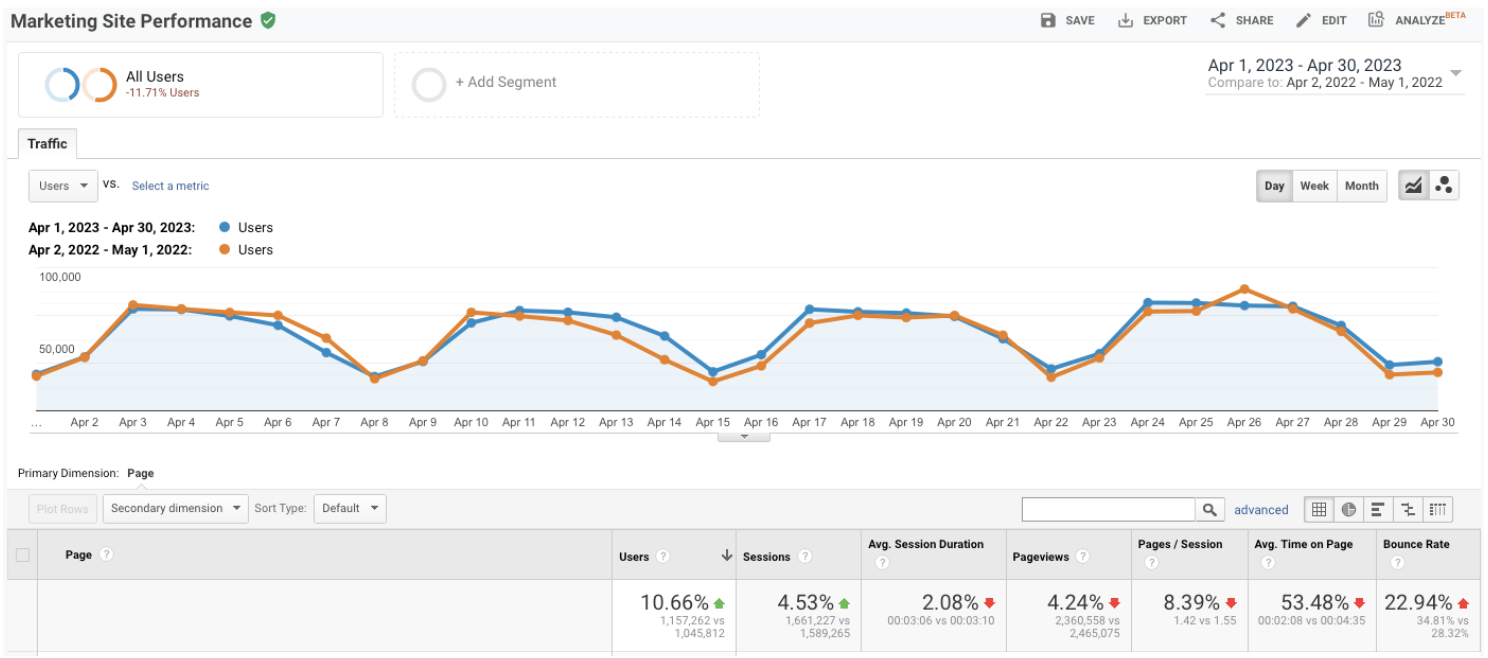
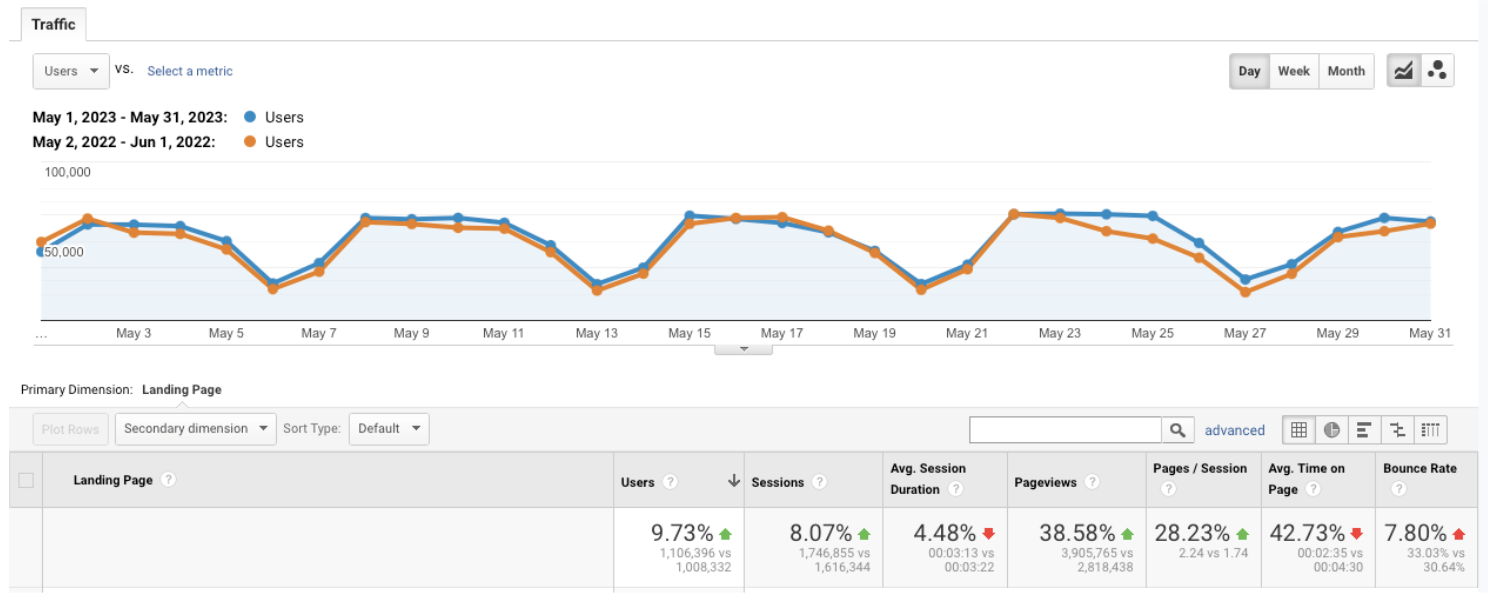
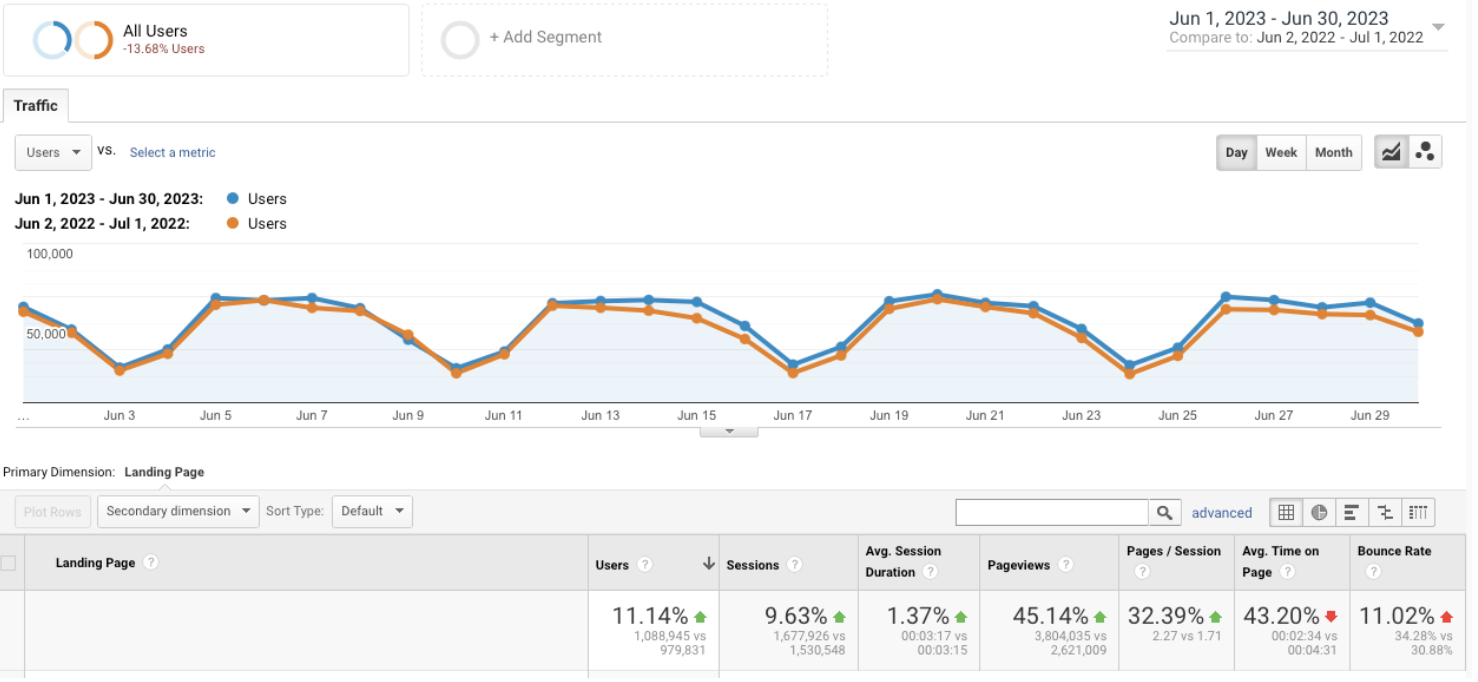
- Flattened the declining traffic trend in one month.
- Returned to meaningful year-over-year growth by month three.
- Second quarter: sessions +12% and pageviews +9%.
- Remainder of the fiscal year: 20% annual growth in site traffic and a 30% increase in site sessions.
Decision support
FAQ: Fast answers, no filler
The objective, outcomes, and next best path in under a minute.
01What is Increase Quality Site Traffic?
A GitLab deep dive on reversing a multi-year marketing site traffic decline by running a cross-functional weekly ship and review cadence.
02What problem did the operating loop solve?
Marketing site traffic was in a multi-year decline and work was fragmented. The loop focused the team on priority pages and levers, shipped weekly, and cut work that did not move sessions and conversions.
03What was built in the operating loop?
Agree on the target pages and levers, ship changes weekly, review impact in the scorecard, and cut anything that did not move sessions and conversions.
04What results are documented?
Flattened the decline in one month and returned to meaningful year-over-year growth by month three. Second quarter delivered sessions +12% and pageviews +9%. The fiscal year delivered 20% annual growth in site traffic and a 30% increase in site sessions.
05Who is this approach for?
Best for cross-functional teams trying to reverse a site decline with a weekly ship and review cadence. Less useful when traffic is stable and the constraint is upstream of the site.
06Where can I go deeper next?
Next, read Unified Funnel Conversion Lift.