
Paid Growth & Measurement
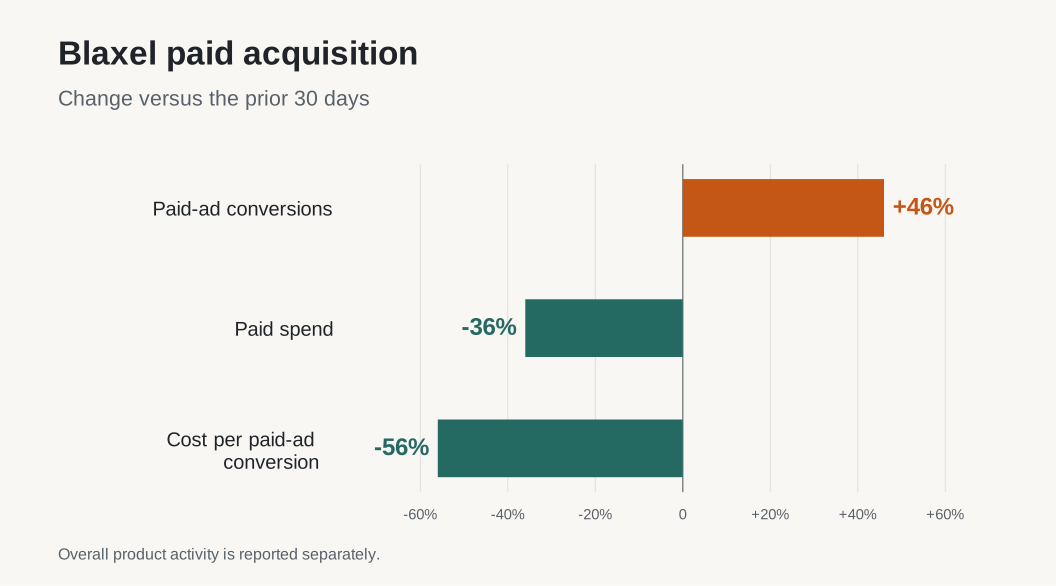
How I ran paid acquisition at Blaxel: 46% more paid-ad conversions on 36% less spend, with product activity and payment outcomes informing the review.
Timeframe
Joined June 2026
Company
Blaxel
Role
Head of Growth & Marketing
Read time
2 min
Read with...
- 01Owned paid acquisition across Google, LinkedIn, X and ChatGPT Ads
- 02Paid-ad conversions up 46%, spend down 36% and cost per paid-ad conversion down 56% versus the prior 30 days
- 03Connected ad delivery, product activity and payment outcomes in the review
A conversion was the start of the question
I owned paid acquisition at Blaxel across Google, LinkedIn, X and ChatGPT Ads, as part of the broader marketing budget. With usage-based infrastructure, I needed to understand both the cost of bringing people in and what they did once they reached the product.
An ad-platform conversion, a product signup, a created workspace and a payment answer different questions. Treating them as interchangeable would make it easy to report growth without knowing which part of the journey had improved.
Bring delivery and product activity into the same review
The paid-growth tooling connected Google Ads delivery with PostHog product activity and Stripe payment outcomes. That put acquisition efficiency and downstream activity into the same review, with the source of each measure visible.
The review surfaced different kinds of decisions. A keyword spending without conversions needed a different response from a converting campaign constrained by budget. Search terms with poor fit could become candidates for exclusion. Budget-limited campaigns were flagged for manual review before scaling.
I built AI-agent workflows to synthesize the conversion data and queue proposed changes for review. This moved paid media review from monthly to daily. Changes still needed human approval, and low-volume results stayed inconclusive instead of becoming a reason to move budget.
The AI Marketing Systems page shows the inputs, review workflow and approval controls.
The paid program became more efficient
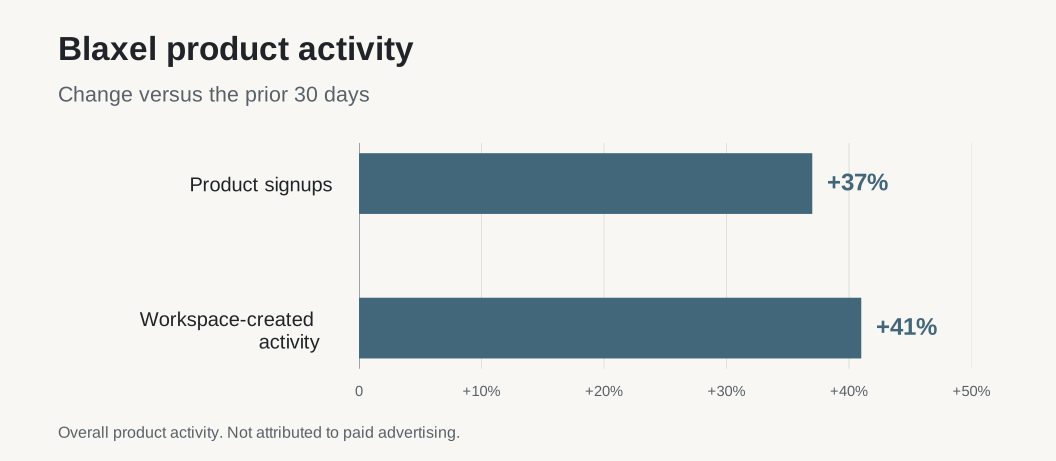
Product activity over the same period
The broader growth work combined this acquisition program with technical customer proof, product positioning and brand. The paid review kept the budget decisions connected to what the product and payment data could actually support.
FAQ
Questions this page answers
01How did Michael Preuss run paid acquisition at Blaxel?
I owned paid acquisition at Blaxel across Google, LinkedIn, X and ChatGPT Ads. The paid-growth tooling connected Google Ads delivery with PostHog product activity and Stripe payment outcomes. AI-agent workflows synthesized conversion data and queued proposed changes for human approval.
02What were the paid-growth results at Blaxel?
Blaxel's paid-ad conversions increased 46% while paid spend fell 36%, with cost per paid-ad conversion down 56%, versus the prior 30 days. Those figures describe the paid program's acquisition efficiency.
03Were Blaxel's product signup increases attributed to paid advertising?
At Blaxel, product signups increased 37% and workspace-created activity increased 41% over the same period as the paid improvements. These are overall product measures. The comparison doesn't establish paid attribution for those increases.
04How often was paid performance reviewed at Blaxel?
I built AI-agent workflows at Blaxel that moved paid media review from monthly to daily. Proposed campaign changes required human approval, and low-volume results remained inconclusive.